
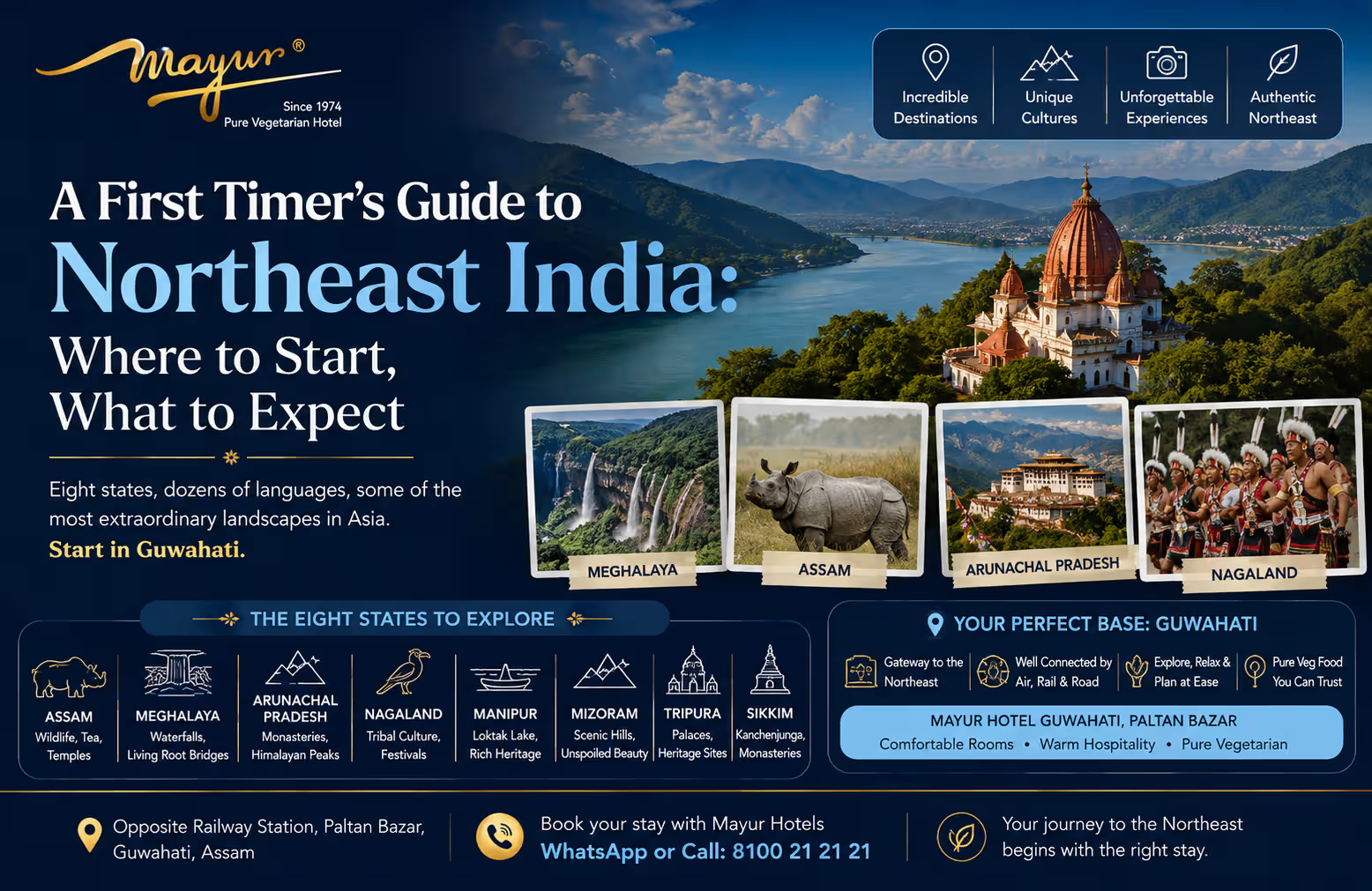
Northeast India is one of those places that most people in the rest of the country have never been to, even though it has been on their list for years. Eight states, each completely different from the next, tucked into the corner of the map between Bhutan, Bangladesh, China, and Myanmar. Landscapes that go from the world's wettest hills in Meghalaya to Himalayan peaks in Sikkim and Arunachal. Over 220 tribal communities, dozens of languages, and food that shares almost nothing with what most of us eat at home.
If this is your first trip, the region can feel overwhelming to plan. This guide is here to help. It covers where to start, what to see in each state, when to go, what permits you need, and how to use Mayur Hotel Guwahati as your base for the journey into the region.
Start in Guwahati. Always.
Guwahati is the largest city in Northeast India and the gateway through which almost every traveller enters the region. Lokpriya Gopinath Bordoloi International Airport handles flights from Delhi, Kolkata, Mumbai, Bengaluru, and Chennai, as well as international connections to Bangkok and Dhaka. If you are coming from anywhere in India, you will most likely land here first.
From Guwahati, every other destination in the Northeast is reachable by road, air, or a combination of both. Meghalaya is 100 km away. Kaziranga National Park is 220 km east. Arunachal Pradesh, Nagaland, and Manipur are further but all accessible with the right planning. Guwahati is also the railhead for the Northeast, with major trains arriving from Delhi, Kolkata, and Mumbai.
Spend at least two nights here at the start of your trip before you go anywhere else. The city has enough to fill those days comfortably: Kamakhya Temple on Nilachal Hill, the Brahmaputra riverfront, Umananda Island by ferry, the Assam State Museum, and the silk and tea markets of Paltan Bazar. More importantly, those two days let you slow down from the journey, eat well, and plan the rest of the trip at pace.
Mayur Hotel Guwahati is in Paltan Bazar, opposite the railway station and a short drive from the airport. It is a pure vegetarian property, which matters in the Northeast: vegetarian options become less straightforward as you move into Nagaland, Manipur, and Arunachal Pradesh. Starting your trip with a few days of reliable, clean vegetarian food before you head into more remote territory is sensible planning. Our Double Executive rooms and Jr. Suite are the popular choices for solo travellers and couples on a Northeast circuit. Families will find the Family Villa and Family Deluxe rooms give everyone room to regroup after the journey in.
The Eight States at a Glance
Here is a practical overview of each state for a first-time visitor.
| State | What it is known for / How long to spend |
| Assam | Tea gardens, Kaziranga rhinos, Kamakhya Temple, Brahmaputra river. Spend 3 to 5 days. Most accessible state for first-timers. |
| Meghalaya | Living root bridges, Cherrapunji waterfalls, Dawki river, Shillong city. Spend 4 to 6 days. Easiest Northeast state for first-timers after Assam. |
| Arunachal Pradesh | Tawang Monastery, Ziro Valley, high Himalayan passes. Spend 5 to 7 days. Requires Inner Line Permit (ILP). Best April to October. |
| Nagaland | Tribal culture, Hornbill Festival (December), Kohima War Cemetery. Spend 3 to 4 days. ILP required for non-Nagaland residents. |
| Manipur | Loktak Lake floating islands, Imphal Valley, Kangla Fort. Spend 3 to 4 days. ILP required. |
| Mizoram | Phawngpui peak, Vantawng Falls, Aizawl city. Spend 3 to 4 days. ILP required. Least visited and most peaceful of the eight. |
| Tripura | Ujjayanta Palace, Neermahal water palace, Unakoti rock carvings. Spend 2 to 3 days. No permit needed. Good rail connection from Kolkata. |
| Sikkim | Kanchenjunga views, Buddhist monasteries, Tsomgo Lake, Gangtok city. Spend 4 to 5 days. No ILP for Indian nationals. Accessible from Siliguri. |
Recommended Routes for a First Trip
8 to 10 Days: Assam and Meghalaya
This is the most popular first-timer combination and the right choice if you want to cover the most ground with the least logistical complexity.
Fly into Guwahati. Spend 2 nights at Mayur Hotel Guwahati, exploring the city. On day 3, drive east to Kaziranga National Park (about 4 hours on NH-27). Spend 2 nights at Kaziranga for morning and afternoon safaris. Return to Guwahati on day 5, then drive to Shillong in Meghalaya (about 3 hours). Spend 3 nights in Shillong, with day trips to Cherrapunji and the living root bridges at Nongriat. Fly home from Guwahati on day 9 or 10.
This route covers the two most accessible states, requires no permits, and gives you wildlife, waterfalls, temples, and the Brahmaputra all in one trip.
12 to 14 Days: Add Arunachal or Nagaland
Once you have done Assam and Meghalaya, the natural next trip is to add one of the permit-required states. Arunachal Pradesh is the most popular addition: fly from Guwahati to Tezpur or drive, then proceed to Tawang over 2 days. The Sela Pass at 4,170 metres is one of the great mountain road experiences in India. Allow 4 to 5 days in Arunachal.
Nagaland is the right addition for travellers interested in tribal culture. Kohima is 4 to 5 hours from Guwahati by road. The Hornbill Festival in the first week of December brings all of Nagaland's tribes together at Kisama Village and is one of the most remarkable cultural events in the country. If you are planning around the festival, book everything at least 3 months in advance.
For Families: Assam and Meghalaya, Slow Pace
Families with young children or elderly travellers do better with a slower version of the Assam and Meghalaya route. 3 nights in Guwahati instead of 2, a relaxed 2 nights in Kaziranga, and 3 to 4 nights in Shillong. The Family Villa at Mayur Hotel Guwahati is the right starting point: space for everyone, a reliable pure vegetarian kitchen, and a central location that makes it easy to rest between days.
What to Know About Each Destination
| ASSAM — Where Every Northeast Trip Begins |
Assam is the most visited Northeast state and the one with the most developed tourism infrastructure. The three things most travellers come for are Kaziranga National Park, Kamakhya Temple, and the tea gardens of Jorhat and Dibrugarh.
Kaziranga is a UNESCO World Heritage Site and home to the world's largest population of greater Indian one-horned rhinoceroses. Morning jeep safaris give you the best chance of a sighting. Elephants, wild buffalo, and tigers are also present, though less reliably spotted. The park is open October to April. It closes during the monsoon when the park floods.
Guwahati is the base for Assam and the entry point for the entire Northeast. The Brahmaputra at this point is enormous: wide, grey-green, and slower than you expect for a river of its size. Kamakhya Temple on Nilachal Hill is one of India's most significant Shakti shrines. The ferry to Umananda Island in the middle of the river is a short and beautiful crossing. The silk markets of Paltan Bazar sell Muga silk, unique to Assam and not found anywhere else in India.
The tea gardens of upper Assam, centred around Jorhat and Dibrugarh, are 5 to 6 hours from Guwahati by road. Several estates now offer guided tours. If tea is a significant interest, add 2 nights in this part of Assam to your itinerary. Majuli island, the world's largest river island, is accessible by ferry from Jorhat and worth a night or two for those who want to slow down entirely.
| MEGHALAYA — Waterfalls, Root Bridges and Clear Rivers |
Meghalaya means abode of clouds and the name is accurate. The state sits on a plateau above the Brahmaputra plain, and the moisture-laden winds from the Bay of Bengal hit the escarpment and release extraordinary rainfall. Cherrapunji and Mawsynram in Meghalaya hold records for the highest annual rainfall on earth.
Shillong, the capital, is a hill town that was the summer capital of British Assam. It has a pleasantly cool climate year-round, a lively music scene (Meghalaya is known as the rock music capital of India), and easy access to the surrounding countryside. Ward's Lake, Don Bosco Museum, and the Police Bazar market area are the main in-city stops.
Cherrapunji is 54 km from Shillong and the base for the living root bridges of Nongriat. These are bridges made from the roots of rubber trees, trained over decades by the Khasi people to grow across rivers and gorges. The most famous double-decker root bridge at Nongriat involves a 3,500-step descent and an equivalent climb back up. It takes a full day and moderate fitness. It is completely worth it.
Dawki, near the Bangladesh border, is known for the Umngot River: the water is so clear that boats appear to float in mid-air above the riverbed. It is one of the most photographed spots in the Northeast and best visited in winter when the water is at its clearest. The drive from Shillong to Dawki takes about 3 hours and passes through scenery that justifies the journey on its own.
| ARUNACHAL PRADESH — The Himalayan Frontier |
Arunachal Pradesh is India's largest northeastern state and one of its most remote. It borders China, Bhutan, and Myanmar, and much of it remains difficult to access. Indian nationals require an Inner Line Permit (ILP), obtainable online through the Arunachal Pradesh government portal. Foreign nationals require a Protected Area Permit (PAP) in addition.
Tawang is the destination most first-time visitors come for. The monastery at Tawang is the largest Buddhist monastery in India and the second largest in the world after Lhasa. It sits at 3,048 metres above sea level in a valley that feels remote even by Arunachal standards. The drive from Guwahati via Tezpur takes 2 days, crossing the Sela Pass at 4,170 metres. The road is open most of the year but can close in winter snow and monsoon landslides. Check conditions before you travel.
Ziro Valley in the Lower Subansiri district is the homeland of the Apatani people, one of the most distinctive tribal communities in the Northeast. The valley is a UNESCO World Heritage nomination site for its landscape and traditional rice-fish cultivation system. It is quieter and less visited than Tawang and suited to travellers who prefer depth over spectacle.
| NAGALAND — Tribal Culture and the Hornbill Festival |
Nagaland is the most culturally distinctive state in the Northeast. It is home to 16 major Naga tribes, each with its own language, dress, and traditions. The state is largely Christian following British-era missionary activity, and its food culture is markedly different from the vegetarian traditions of Assam and Meghalaya: meat and fermented ingredients are central to Naga cooking.
The Hornbill Festival, held in the first week of December at Kisama Village near Kohima, is the reason many people visit. All 16 tribes perform together over 10 days. There is food, dance, music, craft demonstrations, and a genuine sense of occasion. It is one of the most well-organised cultural festivals in India and increasingly popular with international visitors. Accommodation in Kohima during the festival books out months in advance.
Kohima War Cemetery, where Allied and Indian soldiers who died in the 1944 Battle of Kohima are buried, is one of the most moving sites in the Northeast. The battle here is considered the turning point of the Japanese advance into India during World War II. The cemetery is immaculately maintained and the epitaph on the memorial is widely known: When you go home, tell them of us and say, for your tomorrow we gave our today.
| MEGHALAYA, MANIPUR, MIZORAM, TRIPURA AND SIKKIM — For Subsequent Trips |
Manipur, Mizoram, and Tripura are each worth a dedicated trip once you have covered Assam and Meghalaya. Manipur's Loktak Lake, with its floating phumdis (masses of vegetation that support entire ecosystems including a small deer population), is unlike anything else in the country. Mizoram's capital Aizawl sits on a ridge at 1,132 metres and has a quality of light and air that is immediately noticeable. Tripura's Neermahal, a water palace built in the middle of Rudrasagar Lake in 1930, is one of the more extraordinary pieces of colonial-era architecture in India.
Sikkim, technically not one of the Seven Sisters but always grouped with the Northeast, is the right destination for travellers who want mountains, monasteries, and clean air. Gangtok is the easiest Himalayan hill town in India to reach and navigate. Tsomgo Lake at 3,753 metres is accessible year-round by road. The views of Kanchenjunga on a clear morning from points around Gangtok and Pelling are among the finest mountain views in the world.
Permits: What You Need and Where
Indian nationals do not require permits for Assam, Meghalaya, Tripura, or Sikkim. For all other Northeast states, an Inner Line Permit is required.
• Arunachal Pradesh ILP: Apply online at the Arunachal Pradesh government portal or at ILP counters in Guwahati. Takes 1 to 2 working days. Issued for a specific duration and must not be overstayed.
• Nagaland ILP: Available at the Nagaland House in Guwahati and Kolkata, or online. Present it at the Nagaland border checkpoint.
• Manipur ILP: Available online or at the Manipur Bhawan in Delhi and Guwahati.
• Mizoram ILP: Available online or at the Mizoram House in Guwahati and other major cities.
• Foreign nationals: Require a Protected Area Permit (PAP) for Arunachal, Manipur, Mizoram, and Nagaland in addition to the standard Indian visa. PAPs are applied for through the Ministry of Home Affairs with travel agent assistance.
When to Go
October to April is the best window for most of the Northeast. October to November is the single best period: every state is within its ideal season, the light is clear, and the monsoon has ended. Late October to mid-November is when multi-state trips work best.
April is Bihu season in Guwahati, which is extraordinary to witness. December is Hornbill Festival in Nagaland, worth planning a trip around if tribal culture interests you. January is Bhogali Bihu in Assam, a food-centred harvest festival with community feasts and bonfires.
Avoid June to September for most destinations. The monsoon brings heavy rain, landslides on mountain roads, and flooding in the Brahmaputra valley. Kaziranga National Park closes entirely during this period. Meghalaya during monsoon is spectacular but the roads can be dangerous.
A Note for the Vegetarian Traveller
Assam and Meghalaya are the most comfortable states for a strict vegetarian. Pure vegetarian restaurants exist in both, the food culture is not exclusively meat-based, and options are available at most price points.
As you move into Nagaland, Manipur, Arunachal Pradesh, and Mizoram, vegetarian options become more limited. The food traditions of these states centre around pork, beef, smoked meats, and fermented ingredients. You will find vegetarian meals, but they require more active searching. This is one of the practical reasons to base your first Northeast trip around Guwahati and extend outward from there: starting at Mayur Hotel Guwahati gives you a reliable pure vegetarian kitchen at the beginning and end of the circuit. Govind's Restaurant at the hotel serves Assamese and pan-Indian vegetarian food through the day. If you are leaving early for a day trip or a morning safari, the 24-hour Pastry Corner in the lobby is open before the restaurant and useful for grabbing something quick before a long drive.
Your First Night in the Northeast
The first thing most first-time visitors to Guwahati notice, arriving in the evening, is the quality of the air compared to where they have come from. The Brahmaputra is not far. The air is softer, the temperature drops quickly after dark, and the city settles into a rhythm that feels different from any other Indian city of its size.
The Northeast will surprise you. It does that to almost everyone. Start here, take your time, and let it unfold at its own pace.
To book a room at Mayur Hotel Guwahati as the base for your Northeast trip, WhatsApp us directly or call 8100 21 21 21. We can also help you plan your onward travel from Guwahati.


