
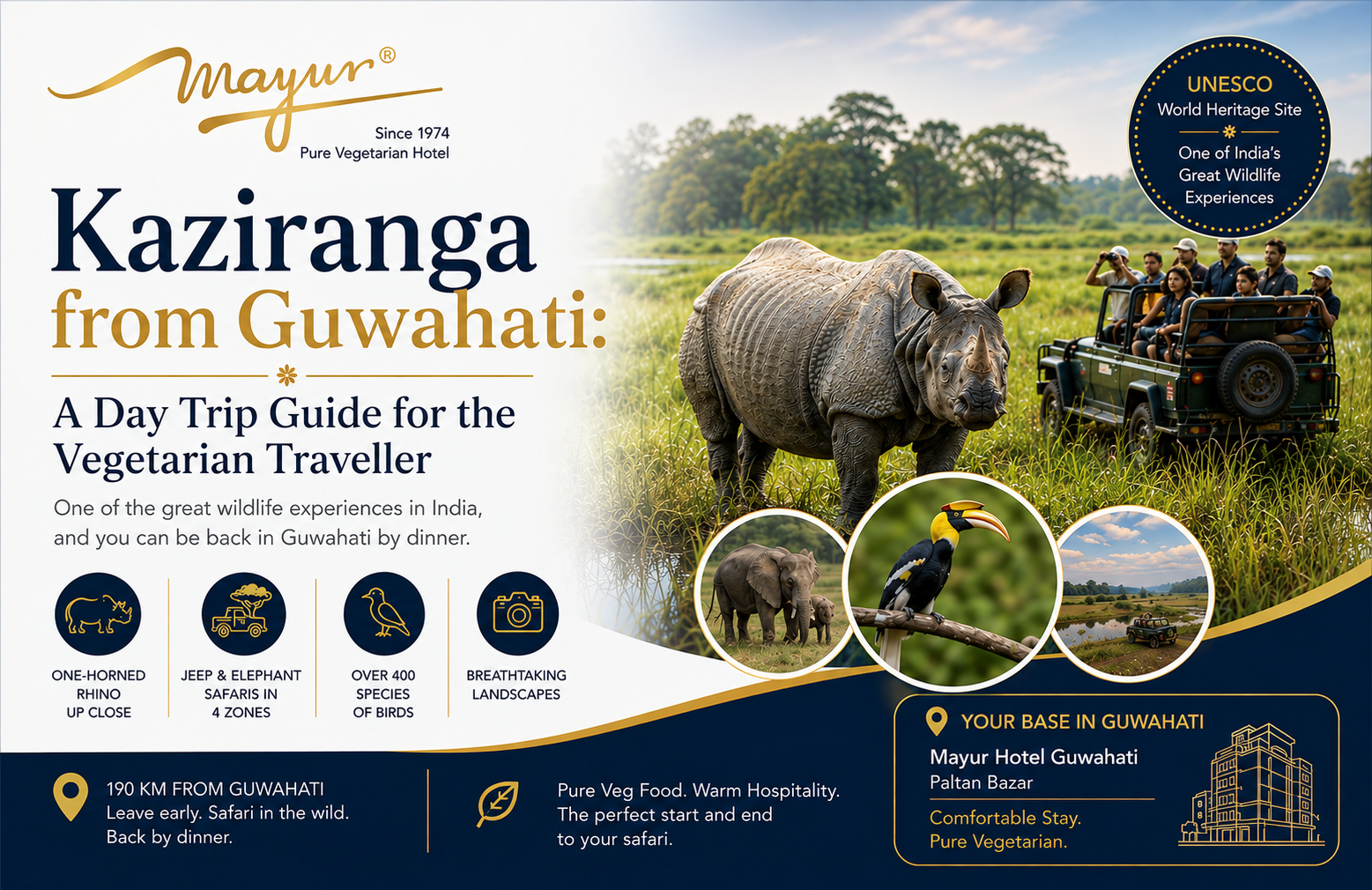
Kaziranga National Park is the reason many people fly into Guwahati. A UNESCO World Heritage Site since 1985, it is home to nearly two-thirds of the world's population of the greater Indian one-horned rhinoceros. It also has elephants, wild water buffalo, swamp deer, tigers, and over 400 species of birds. On a good morning safari, you can see all of this within a few hours.
The park is about 190 km from Guwahati by road, which makes it entirely possible as a day trip. You leave early, do a morning safari, spend a few hours in the park zone, and are back in Guwahati by evening. If you want a more relaxed pace, staying one night near the park and returning the next morning works well too. Either way, the journey from Mayur Hotel Guwahati is the natural starting point.
Quick Facts
| Distance | Approx. 190 km from Guwahati (Kohora, the central entry point) |
| Drive time | 4.5 to 5 hours each way on NH-27 |
| Park open | November to April. Closed during monsoon due to Brahmaputra flooding |
| Morning safari | 7:00 AM to 10:30 AM. This is the slot to book |
| Afternoon safari | 1:30 PM to 4:30 PM. Wildlife less active. Morning strongly preferred |
| Safari type | Jeep safari in all four zones. Elephant safari in Central and Western zones only |
| Booking | Book via the Assam Forest Department online portal. Book in advance Oct to Feb |
| Food in the park | No restaurants inside. No food allowed during the safari |
| Base hotel | Mayur Hotel Guwahati, Paltan Bazar, 190 km from Kaziranga |
Why Kaziranga Is Worth the Drive
The one-horned rhinoceros looks prehistoric. It is large, armoured, and moves with a slow deliberateness that makes you feel you have gone back several million years. Seeing one in the wild, at close range from a jeep that has stopped on a grass track with a rhino grazing 20 metres away, is the kind of thing you remember for a long time.
Kaziranga has around 2,600 rhinos as of the most recent count. The density is high enough that sightings are almost guaranteed on a morning safari, which is unusual for large wildlife anywhere in India. Elephants, wild water buffalo, and swamp deer are also reliably spotted. Tigers are present but sightings are rarer and largely a matter of luck.
The park sits on the southern bank of the Brahmaputra. The landscape is a mix of tall elephant grass, open flood plains, and forest. In the early morning, with mist still sitting over the grasslands and the light coming in low, it is one of the most beautiful places in Assam. The drive along the highway from Guwahati is itself worthwhile: tea gardens, small villages, the Brahmaputra visible in the distance, and the air changing gradually as you move east.
The Four Safari Zones
Kaziranga is divided into four zones. Each has its own entry gate, its own character, and its own strengths. For a day trip from Guwahati, you will realistically visit one zone. Choose based on what you most want to see.
Central Zone (Kohora): Best for a First Visit
The Central Zone is where most first-time visitors go and for good reason. It has the highest concentration of rhinos in the park, open grasslands that make wildlife easy to spot, and both jeep and elephant safaris available. The zone runs from Kohora, which is the main tourist hub of Kaziranga. If you are doing a day trip and have not been to Kaziranga before, start here.
Western Zone (Bagori): Best for Elephants
The Western Zone, entered from Bagori, is particularly good for elephant sightings. The open landscape and water bodies mean herds are visible at a distance and up close. This is also the preferred zone for elephant safaris: riding on an elephant through the grass brings you to a different height and a different proximity to the wildlife than a jeep allows. For families, the elephant safari in the Western Zone is often the highlight of the entire trip.
Eastern Zone (Agaratoli): Best for Birds and Quiet
The Eastern Zone is the least crowded of the four. It is quieter, the wildlife sightings require more patience, and the zone is especially good for birdwatching. Over 400 bird species have been recorded in Kaziranga, and the Eastern Zone's water bodies attract migratory species in large numbers through the winter months. This zone also offers a boat safari, the only one in the park. If you have been to Kaziranga before and want a different experience, the Eastern Zone is the right choice.
Burapahar Zone (Ghorakati): Best for Forest and Gibbons
Burapahar is the first zone you pass when driving in from Guwahati. Unlike the open floodplain zones, Burapahar has hilly terrain and dense forest. The main draw is the Hoolock Gibbon, the only ape species in India, which lives in the forest canopy. Wildlife sightings are less frequent than in the Central or Western zones, but the experience is more immersive and entirely different in character. For travellers who prefer depth over spectacle, this is a very good zone.
How to Plan the Day Trip
The Night Before
Book your jeep safari online in advance through the Assam Forest Department portal. Safaris fill up, especially in the peak months of November to February. Decide which zone you want and book the morning slot. Afternoon safaris exist but wildlife activity drops significantly in the midday heat.
The 24-hour Pastry Corner at Mayur Hotel Guwahati is open through the night. Pick up something for the road before you leave. There is nothing to eat inside the park during the safari and the drive is long.
Leaving Guwahati
Leave by 5:30 to 6:00 AM. This gives you a 4.5 to 5 hour drive along NH-27 and gets you to the park zone in time for the morning safari. The road is in good condition for most of the route. The Nagaon bypass has improved significantly in recent years. The final stretch into the Kohora area runs through low-lying land near the Brahmaputra and can be slow. Leave enough time.
The drive is pleasant. Tea gardens begin appearing around Nagaon and continue east. The Brahmaputra comes into view periodically on the left. Small Assamese villages line the road. It is a good drive to do slowly with the windows down.
At the Park
Arrive at your zone's entry gate at least 30 minutes before the safari starts. Bring your booking confirmation and a government photo ID. No food is allowed inside the reserve during the safari. Cameras and phones are permitted but keep noise to a minimum once inside the park.
The morning safari runs for about 3 hours. Your driver and naturalist guide know the trails and the animals. Follow their instructions about when to stay in the vehicle and when noise needs to stop. Rhinos are large and fast when provoked. The jeep track is your safety boundary and the guide is there for a reason.
After the Safari
The area around Kohora has tea stalls and small eateries outside the park boundary. For a strict vegetarian, options are limited. Most local food in this part of Assam includes fish and chicken. A better plan is to eat a proper meal before you leave Guwahati in the morning and return to the hotel for dinner. If you are staying overnight near the park, ask specifically about vegetarian options when you book your accommodation.
The Drive Back
Leave Kaziranga by 1:00 PM if you want to be back in Guwahati before 7:00 PM with reasonable traffic. Stop at one of the tea garden viewpoints on the way back if the light is good in the afternoon.
If You Stay One Night Near the Park
A single overnight stay near Kaziranga gives you two morning safaris instead of one, which is the right way to see the park properly. You can do the Central Zone on the first morning, rest through the afternoon, then do the Western or Eastern Zone the following morning before driving back to Guwahati.
Mayur Hotel Guwahati works as your base for the first and last nights of the trip. The hotel's central location in Paltan Bazar means the drive to NH-27 is quick, provided you leave early. Our Family Villa and Family Deluxe rooms are well-sized for families who want space to rest between long days on the road.
What to Carry
• A warm layer for the early morning. Kaziranga in November and December can be cold before sunrise, especially in an open jeep.
• Binoculars if you have them. Useful for birds and for spotting wildlife at distance before the jeep gets closer.
• A camera with a decent zoom. Phone cameras work for close sightings but a zoom lens is better for the park.
• Water for the drive and the safari. There is no reliable supply inside the park.
• Sunscreen and a hat. After the morning mist clears, the sun is strong.
• Booking confirmation and government photo ID. Both are checked at the gate.
• Cash. Not everything at the park accepts digital payment, particularly smaller entry fees and guide tips.
Best Time to Go
The park is open November to April. October to February is the sweet spot: the air is clear, the grass has been managed after the monsoon floods recede, and wildlife visibility is at its best. Rhinos are easier to spot in the shorter post-monsoon grass.
March and April are warmer. The park remains open and wildlife is still visible but the heat builds through the day and the morning safari window becomes more important. April is also Bihu season in Guwahati, which is worth combining with a Kaziranga trip if you time it right.
Avoid May onwards. The park closes around mid-May when the Brahmaputra floods the grasslands. It reopens in October after the waters recede.
Kaziranga is one of those places that delivers on what it promises. The rhinos are there. The safari works. The landscape is genuinely extraordinary. And because the drive from Guwahati is manageable, it fits into almost any Northeast India itinerary without forcing a major detour.
To plan your Kaziranga trip from Mayur Hotel Guwahati, WhatsApp us directly or call 8100 21 21 21. We can help with car arrangements, safari booking guidance, and travel timing based on the season.


