
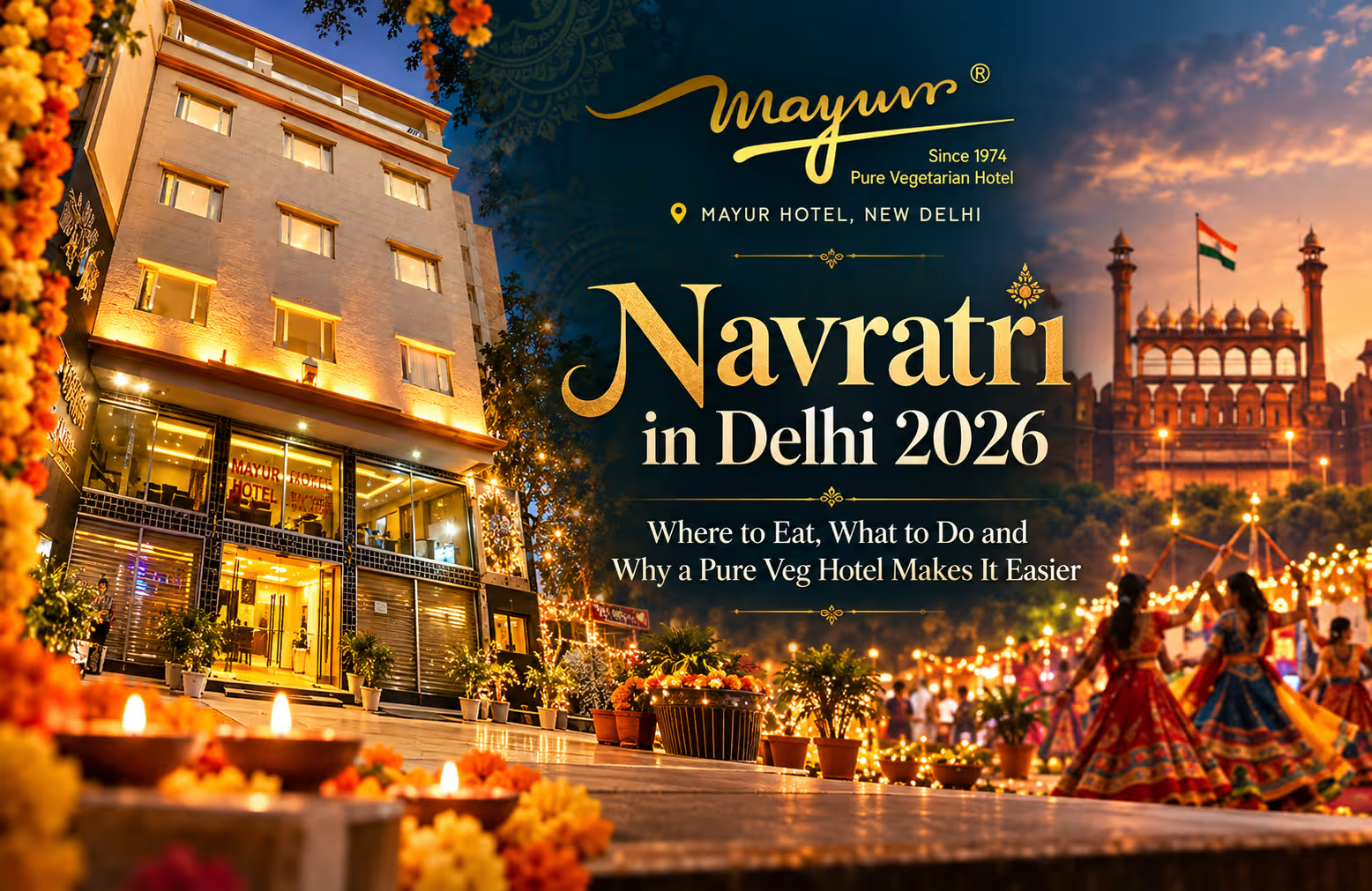
Navratri is the nine-day festival dedicated to the nine forms of Goddess Durga. Twice a year, in spring and in autumn, millions of Indians observe it with fasting, daily prayers, temple visits, and a strictly vegetarian diet. The autumn version, Shardiya Navratri, is the bigger and more widely celebrated of the two.
In Delhi, Navratri transforms the city in ways that are hard to describe if you have not experienced them. Temples that are quiet on ordinary mornings fill up before sunrise. Stalls selling sattvic food appear on pavements. Garba and dandiya events run through the night in parks, community grounds, and housing society courtyards. The city takes on a particular energy during these nine days and visiting Delhi during Navratri, with the right planning, is one of the better travel decisions you can make.
This guide covers the 2026 dates, what to do each day, where to eat as a strict vegetarian, and why Mayur Hotel New Delhi in Paharganj is the most practical base for the festival period.
Navratri 2026: The Dates
| Festival | Shardiya Navratri 2026 |
| Start date | Sunday, 11 October 2026 (Ghatasthapana) |
| End date | Monday, 19 October 2026 (Maha Navami) |
| Vijayadashami | Tuesday, 20 October 2026 (Dussehra) |
| Durga Ashtami | 19 October 2026 |
| Chaitra Navratri | Also observed in March or April each year. Dates vary annually. |
| Base hotel | Mayur Hotel New Delhi, Arakashan Road, Paharganj |
What Navratri Is and Why Delhi Does It Well
The word Navratri means nine nights. Each of the nine days is dedicated to a different form of the goddess, from Shailputri on the first day to Siddhidatri on the ninth. Devotees often observe a colour associated with each goddess: in 2026, the nine colours run from orange on day one through white, red, royal blue, yellow, green, grey, purple, and peacock green on the final day.
The fasting tradition during Navratri is one of the most widely observed in India. Millions of people eat only sattvic food for nine days: no grains, no onion, no garlic, no meat, no alcohol. What is permitted varies by tradition and by family, but the common thread is a move toward lighter, cleaner, plant-based eating.
Delhi does Navratri at scale. The city has a large Hindu population with deep North Indian devotional traditions. Jhande Walan Temple, near Karol Bagh, sees hundreds of thousands of visitors over the nine days and is one of the most significant Navratri temples in the country. Chattarpur Temple complex in South Delhi is another major centre. The Ramlila Maidan Dussehra celebrations on October 20, which follow the end of Navratri, draw enormous crowds and culminate in the burning of Ravana effigies that are visible from across the city.
What to Do in Delhi During Navratri
Visit Jhande Walan Temple
Jhande Walan Temple, on the ridge near Karol Bagh, is the most visited Navratri temple in Delhi. The queue during the nine days can run for hours on peak mornings, particularly on Ashtami (19 October) and Navami. If you are going for darshan rather than the atmosphere, arrive before 6 AM. If you want to experience the full temple energy without necessarily entering the sanctum, visiting in the early evening gives you the crowd, the music, and the illuminations without the queue.
The metro is the easiest way to get there. Jhande Walan station on the Green Line is directly outside. From Mayur Hotel New Delhi in Paharganj, the nearest metro is Ramakrishna Ashram Marg on the Blue Line, one stop from Rajiv Chowk where you change to the Green Line toward Inderlok.
Gurudwara Bangla Sahib
Gurudwara Bangla Sahib near Connaught Place is open to everyone regardless of faith and the langar, the free community kitchen, serves simple vegetarian food through the day. During Navratri, when many visitors are fasting or eating only sattvic food, the langar is a reliable and genuinely welcoming place to eat. Dal, roti, rice. You sit on the floor alongside whoever else is there. It costs nothing.
Birla Mandir, Connaught Place
Birla Mandir, also known as Laxminarayan Temple, is a large and well-maintained temple complex a short walk from Connaught Place. During Navratri it is illuminated in the evenings and the crowd is thick but manageable. The complex houses shrines to several deities and the main hall is genuinely impressive after dark during the festival period.
Garba and Dandiya Events
Delhi's garba and dandiya events during Navratri run from around 8 PM and go well past midnight. The largest venues are in Connaught Place, Noida, and Greater Noida, but neighbourhood events in residential areas are easier to join informally. Many require tickets, which are sold a few days in advance. The city's expat and diaspora communities also run large events that are open to visitors. Check local Delhi event listings in the week before the festival for confirmed venues and tickets.
Ramlila and Dussehra
The Ramlila Maidan in central Delhi hosts the city's largest Ramlila performance through the Navratri period, culminating in the Dussehra celebrations on 20 October. The burning of giant effigies of Ravana, Kumbhkarna, and Meghnath at the Ramlila Maidan is one of Delhi's largest single-day public events. Book a spot with a clear sightline if you plan to attend. The metro is the only practical way to reach it: Ramakrishna Ashram Marg station is the closest.
What to Eat During Navratri in Delhi
Navratri fasting food has its own logic. No grains means no wheat and no rice in most traditions. What is eaten instead are ingredients that are considered sattvic and light: singhare ka atta (water chestnut flour), kuttu atta (buckwheat flour), sabudana (tapioca pearls), rajgira (amaranth), potatoes, pumpkin, dairy, rock salt instead of regular salt, and fresh fruit.
Delhi's street food scene during Navratri produces its own version of this: kuttu ki puri, sabudana khichdi, aloo sabzi with rock salt, makhana curry, and singhare ka halwa. These are available at stalls across the city during the festival period, particularly around temples and in residential markets.
Street Stalls and Markets
The markets around Karol Bagh, Paharganj, and Chandni Chowk have Navratri-specific stalls from day one of the festival. Kuttu puri with aloo sabzi is the most common street offering and it is genuinely good. Makhana, the puffed lotus seed that is a Navratri staple, appears at dry fruit shops and street stalls alike in both raw and flavoured forms. Sabudana vada, crisp tapioca patties with peanut chutney, is the street snack to look for on Paharganj's inner lanes.
One thing worth knowing: the Navratri stalls in Delhi mark themselves clearly. During the nine days, a stall that serves Navratri food will usually say so and the ingredients used are recognisably different from everyday street food. If you are observing a strict fast, it is worth asking the vendor directly which flour was used.
Why a Pure Veg Kitchen Makes This Simpler
Mayur Hotel New Delhi is a pure vegetarian hotel. The kitchen uses no meat, no eggs, and is free of the cross-contamination concerns that make eating at regular hotels complicated during a fast. For guests observing Navratri, this means the hotel kitchen is already aligned with the most important requirement before any specific requests are made.
Why Mayur Hotel New Delhi Is the Right Base for Navratri
Location
The hotel is on Arakashan Road in Paharganj, which puts you within a short metro or auto ride of every major Navratri destination in central Delhi. Jhande Walan Temple is three metro stops from Ramakrishna Ashram Marg station, which is a 10-minute walk from the hotel. Birla Mandir and Connaught Place are one metro stop from the same station. New Delhi Railway Station is 10 minutes on foot.
For guests arriving in Delhi specifically for Navratri, the Paharganj location means you can check in, have a meal, and be at the nearest temple within the hour, without needing to navigate an unfamiliar part of the city or take a long cab ride.
The Kitchen
A pure vegetarian kitchen during a nine-day fasting festival is not a small thing. Meals at the hotel are available through the day without the menu anxiety that comes with eating at a regular kitchen during Navratri. Breakfast before the morning temple visit, a light meal when you return, dinner after an evening at a garba venue. The kitchen is consistent and the food is clean.
Room Options
Solo devotees and pilgrims tend to book the Single Deluxe or Double Executive rooms. Couples and smaller family groups usually go for the Jr. Suite. Families who travel together for Navratri, which is common particularly for Ashtami and Navami, do best in the Family Villa or Family Deluxe rooms. The bigger rooms mean the family has space to rest between the morning temple visit and the evening garba, which is a long day any way you manage it.
Booking Early
Delhi hotels fill up for Navratri, particularly in the week around Ashtami and Navami when many families plan a visit specifically for the main puja days. Mayur Hotel New Delhi and Mayur Assam Hotel New Delhi both fill fast during this period. If you are planning to visit Delhi for Navratri 2026, October 11 to 20, the earlier you book the better. Most regular guests book 4 to 6 weeks in advance.
Practical Notes for Navratri Visitors
Getting Around
The Delhi Metro is the most reliable way to move during Navratri. The city's roads are unusually busy around major temples in the morning and at Ramlila and garba venues in the evening. Build in extra time for anything that requires a cab or auto-rickshaw after 7 PM during the festival period.
What to Wear
There is no formal dress code for temple visits in Delhi, though covered shoulders and a dupatta or stole for women is the appropriate standard at most sites. Many visitors choose to wear the colour of the day as a way of participating in the nine-day sequence. In 2026 the colours run orange, white, red, royal blue, yellow, green, grey, purple, and peacock green across the nine days. Wearing the day's colour is a choice, not a requirement, but it is part of how Delhi marks the festival.
Chaitra Navratri: The Spring Version
If you cannot make it to Delhi in October, Chaitra Navratri in spring, usually falling in March or April, is the other major observation. It is slightly smaller in scale than Shardiya Navratri in terms of public events, but the temple traditions and fasting practices are the same. The hotel books up for Chaitra Navratri as well, though usually with less lead time needed than the autumn festival.
• Carry cash for temple donations, street food, and market purchases. Digital payment is not available everywhere near temples during peak festival days.
• Early mornings are best for temple visits. Queue times at Jhande Walan and Birla Mandir are shortest before 7 AM.
• The metro is the only practical way to reach Ramlila Maidan for Dussehra on 20 October. Road access is restricted near the venue on the day.
Delhi during Navratri is a particular experience. The combination of early morning temple visits, fasting food on every corner, garba through the night, and the building energy toward Dussehra makes these nine days unlike any other time in the city. If you have been thinking about visiting Delhi in October, this is the right week to plan around.
To book a room at Mayur Hotel New Delhi for Navratri 2026, WhatsApp us directly or call 8100 21 21 21. October rooms fill up from August onwards and we suggest booking as early as you can.


